

Surf Spot: Huntington Beach
May 18, 2026
beginner tipslearnsurf spotstravel
Bolsa Chica and HB Guide
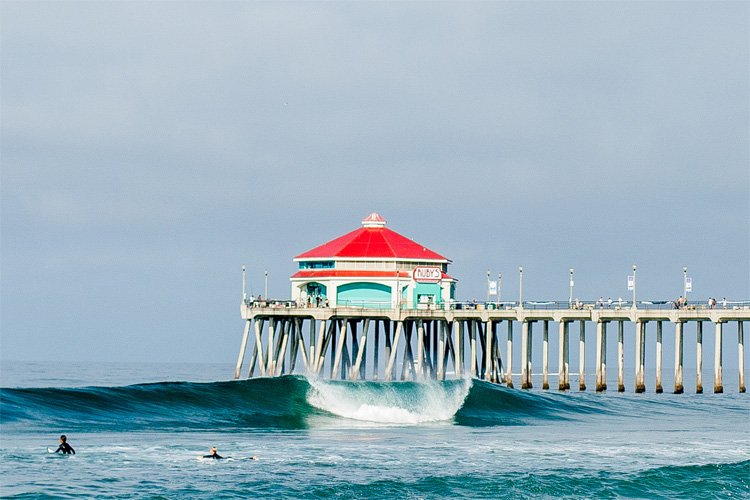
Huntington Beach Pier is one of the most iconic surf zones in California and has waves almost daily. Stretching across miles of open beach, Huntington picks up swell consistently and can change dramatically depending on tide, wind, and sandbars. From the beach the waves can sometimes look mellow, but the lineup often has more power, stronger currents, and more crowd energy than many other Southern California spots.
The lineup is spread across multiple peaks both north and south of the pier, which helps spread surfers out and creates a variety of different waves throughout the day. Huntington Beach is an amazing place to improve because it teaches surfers how to read shifting sandbars, identify good peaks, and adapt to changing ocean conditions.
Please read the sections below on how the wave works and do not forget to review your travel guide document located in your folder.
Surf history of the spot
Huntington Beach Pier sits in the heart of one of the most iconic surf towns in the United States. Known as “Surf City USA,” Huntington Beach became a major center of California surf culture during the 1950s and 1960s as surfing exploded in popularity across Southern California. Its long stretches of sand, consistent waves, and year round surf conditions helped shape generations of surfers and beach culture.
As surfboard design evolved from heavy wooden boards into lighter fiberglass shapes, Huntington Beach became a testing ground for progression in both performance surfing and competitive surfing. The area gained worldwide recognition through major surf contests, including the historic US Open of Surfing, which continues to draw surfers and fans from around the world every summer.
While the pier is the most famous peak, the beach itself stretches for miles and offers a variety of different sandbars and wave types depending on swell, tide, and wind. Local surfers have spent decades learning how shifting sandbars and seasonal swells change the lineup from one day to the next.
Today, Huntington Beach remains one of the most active surf communities anywhere in the world. It is a place where beginners learn their first pop up while world class surfers train just a few peaks away. The beach rewards awareness, patience, and respect in the water, especially during crowded summer conditions.
How the waves work
North side peaks
The north side of the pier usually offers more organized peaks and longer rides, especially on south and southwest swells. Sandbars here can create clean lefts and rights with playful sections for turns and small maneuvers. This zone is generally better for intermediate surfers because crowds can become competitive near the better peaks.
South side peaks
The south side of the pier often has punchier and faster waves. South swells can create steep takeoffs and quick sections that reward fast pop ups and confident turns. Depending on sandbars, this area can produce fun lefts that run down the beach. More experienced surfers usually sit closest to the best takeoff zones.
Middle beach break and Bolsa Chica: for beginners
The stretches away from the pier are the most beginner friendly areas. These sand bottom peaks are softer, more forgiving, and ideal for practicing fundamentals. Beginners should spread out, avoid surfing directly inside crowded peaks, and stay aware of drifting currents that can slowly move you down the beach.
Safety and surf etiquette
• Watch the waves before entering so you understand where the main peaks and currents are forming. Huntington Beach can have strong lateral currents, especially near the pier.
• Be respectful of surfers already riding waves and never drop in on someone already up and riding.
• Stay aware of the pier, especially on larger days or during strong currents.
• Crowds can become heavy during summer and weekends, so patience and communication are important.
• Beginners should stay farther from the main pier peaks and surf the softer inside sandbars.
• Always check in with a coach every 15 minutes and keep awareness high in the lineup.
Huntington Beach is a great place to improve because it offers a wide range of wave types and constantly changing sandbars. It teaches surfers how to read the ocean, position themselves in shifting peaks, and build confidence in a real California beach break environment.