How Waves Are Formed?
May 4, 2026
conditionskid's surf lessonslearnsurf knowledgetips and tricksweather
How Waves Are Formed 🌊
A simple guide for surfers who are still figuring it all out
Ever looked out at the ocean and wondered where waves actually come from?
They do not just randomly show up at the beach. They start out in the open ocean, sometimes really far away.
If you want a deeper dive later, this is a solid breakdown from NOAA https://www.noaa.gov/jetstream/ocean/waves
Here is the simple Sunrise version.
It all starts with wind 🌬️
Waves begin when wind blows across the surface of the ocean.
As wind moves over the water, it pushes on it and transfers energy into it. That energy starts creating small ripples that grow into waves.
Think of it like blowing across the top of a glass of water. Tiny movement first, then bigger and bigger waves if the wind keeps going.
If you want to see how scientists explain this, check this out https://www.britannica.com/science/wave-water
Big wind makes big waves
Waves depend on three things: how strong the wind is how long it blows and how far it travels across the ocean
That distance is called the fetch. The bigger the fetch, the more energy gets pushed into the water.
More energy means bigger waves. The big swells we see at our local beaches typically come from Australia's south or up by Alaska and Russia in the north.
This guide explains fetch in a simple way https://www.naturalnavigator.com/news/2018/03/what-is-fetch/
Waves become swell 🌊
Once waves move away from the wind, they turn into swell.
Swell is what travels across the ocean for long distances. It can come from storms thousands of kilometers away and still arrive at the beach.
That is why waves can show up even when the weather feels calm and sunny where you are.
Watch this for more information:
https://www.youtube.com/watch?v=_LRc6k-clzE
Why waves break at the beach
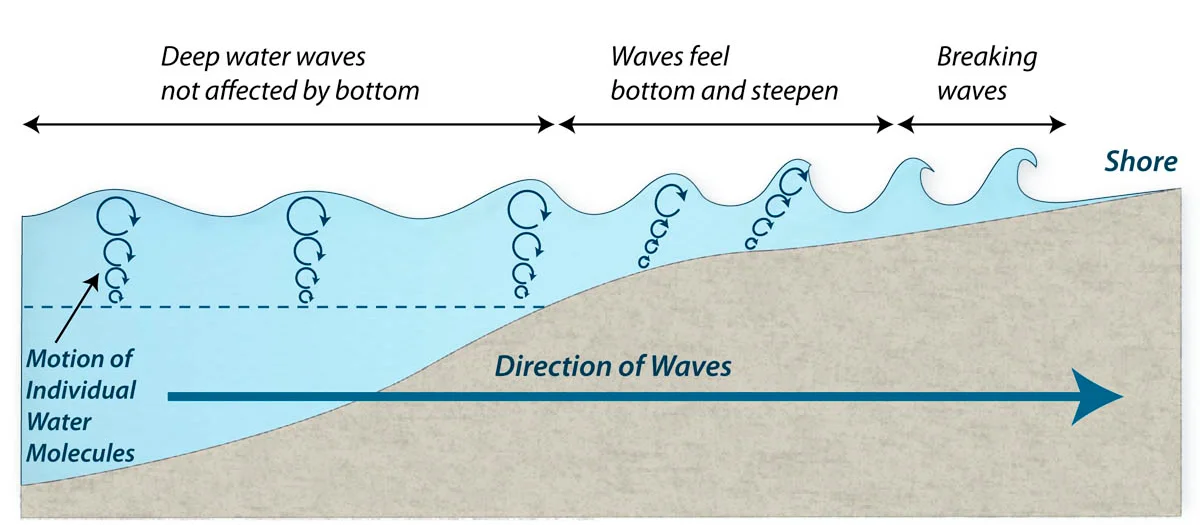
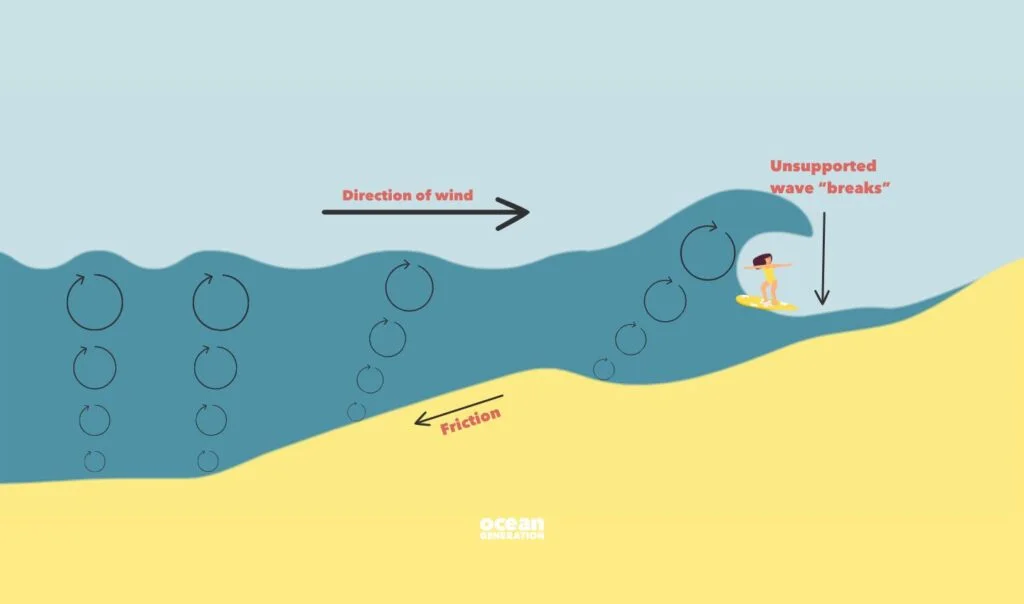
As swell gets closer to shore, the water gets shallower.
The bottom of the wave starts slowing down because it is dragging on the ocean floor. The top of the wave keeps moving faster.
When the top moves ahead of the bottom, the wave tips over and breaks.
Think back to last week's blog post or watch this video:
https://www.youtube.com/watch?v=7FjRLTHkL7A
Why every beach is different 🏝️
Not all waves look the same because not all ocean floors are the same.
Some beaches have soft sand. Some have reefs. Some have rocky bottoms.
The shape underneath the water controls how the wave breaks. That is why some waves are slow and easy and others are fast and powerful.
If you want to learn about different types of surf breaks please visit last week’s blog post:
https://www.sunrisesurfacademy.com/blog/types-of-waves
Where XXL big waves come from
Big waves usually start with big storms out in the ocean.
Strong winds from storms build up a lot of energy in the water. That energy travels as swell until it reaches land.
That is how those huge surf days show up out of nowhere.
Want to see how storms create XXL waves? https://www.youtube.com/watch?v=edaJSZs-n9s
The ocean never stops moving
Even when the ocean looks flat, it is still full of energy moving in different directions.
Waves are always being created somewhere on Earth and traveling across the planet.
So every wave at the beach is part of something much bigger.
Simple way to remember it
Wind creates energy Energy becomes swell Swell travels across the ocean Swell turns into breaking waves Breaking waves which we ride!